

Fermented civilization
The history of fermentation is the history of human evolution.
Anthropologists consider the discovery of fire to be one of the most game-changing discoveries in human history. In addition to its instantly visible light helping to ward off predators and its ability to transform metals into better hunting weapons, fire’s ability to “gelatinize” starches and denature proteins essentially took humans off the evolutionary battlefield hundreds of thousands of years ago. It elevated us to a higher position, giving us a permanent advantage over all other living things.
Cooking makes meat easier to digest and grains edible. In a sense, cooking is digestion outside of your body, giving it a head start and freeing your body’s metabolism to focus its efforts on more useful things. The brain is one example.
But heat isn’t the only way to cook food. You can also cook food with acid. For example, the popular fish salad is basically seafood cooked in lemon juice—which is, in a way, acid. Like heat, acid denatures proteins and “kills” bacteria, which is why we often take things that bacteria and fungi love to eat and soak them in an acid-like vinegar, thus preserving them for longer than they would at room temperature.
There is a third way to cook food, however, and it’s a bit counterintuitive and involves welcoming the bacteria we’re trying to kill or avoid and that hate heat or acid. The key is to find the bacteria you want while keeping the bad guys at bay—which is bad for your health and the environment. A less-than-ideal way to describe this is “rotting tactics” – or you could think of a way to re-describe the process and call it “fermentation”, a word that dates back millennia just to telling someone “bubbles or effervescence”, which is how we discovered the process. When baking, flour and water start to bubble as the natural yeast in the dough, bacteria break down the starch and turn it into sugar, then eat the sugar to produce carbon dioxide.
Fast forward a few millennia, and we’ve mastered fermentation to the point where we can pick and choose the right bacteria to create complex flavours in our food. So here’s what you need to understand about fermentation to make it a regular part of your daily (weekly – yearly, since some of these reactions take time) cooking routine. There’s now a growing body of evidence that eating probiotic-rich fermented foods is good for your gut health and has a positive impact on your overall health. long-term health.
There are three types of fermentation that are useful to understand in the kitchen.
The first is yeast fermentation, which is pretty well understood in the context of baking hot dogs. So we’ll move straight to the second step – Lacto-fermentation. As the name suggests, it’s a fermentation process that uses a family of bacteria that like to eat sugars (in starch) and turn them into Carbon dioxide and Lactic Acid. The latter, like most Acids, has a pleasant sour taste and, crucially, helps to deter other harmful microorganisms by creating an acidic environment.
The most common application of Lacto-fermentation is to turn today’s milk into tomorrow’s yogurt using bacteria from yesterday’s yogurt. The key to getting this right is temperature. Milk that has been boiled and then cooled to 45 degrees Celsius is the best yogurt. In hot summer conditions, this will take about four hours. It may take longer if your room temperature is lower.
But did you know that Jan’s lenmen can Lacto-ferment literally anything? Try cutting a few carrots into long, thick strips and soaking them in 2% salt water (2g salt in 100g water), making sure no part of the carrots is exposed to air. Over 48-72 hours, the Lactobacteria will ferment the carrots, giving them a complex sour taste without the original sweetness. This makes a great condiment and a more delicious alternative to “pickling” carrots or any other fruit or vegetable in acid-like vinegar.
The reason we use salt is a great example of human ingenuity. The strains of Lactobacteria we are interested in have developed a certain tolerance to salt that other dangerous bacteria do not have. That’s why we use salt as a general preservative. Salt keeps the “bad guys” at bay while allowing our friendly Lactobacteria to do their thing.
The third type of fermentation is using a SCOBY – short for “symbiotic culture of bacteria and yeast”. In this method, not just bacteria but an ecosystem of bacteria share space with some yeast (which is a fungus) to ferment our food. A good example of this is ginger ale, a starter culture made by leaving pieces of ginger (with skin, yeast and bacteria) to soak in sugary water for a week. This starter can then be used to ferment any fruit juice into a naturally carbonated (slightly alcoholic) beverage such as ginger ale, watermelon beer or pineapple beer...
The process of fermenting rice and bananas into banana flour uses the same principle described above. Bananas are inoculated with bacteria and yeast, combined with a small amount of salt to keep other unsuitable bacteria away, and fermented into a frothy, sour dough that can then be used to make future dishes.
Without fermentation, there would be no bread, and without bread, there would be no ancient Mesopotamia or Egyptian civilization. Without fermentation, bananas would spoil, and there would be no more plant-based products to feed growing children, no more for women to beautify themselves or men to work out at the gym, no more for healthy meals.
Fermented drinks are a natural and healthy source of refreshment that can be personalized to our tastes. We learned from our ancestors how to create drinks that are non-alcoholic or have very low alcohol content and are good for the intestinal flora thanks to probiotics. You can enjoy an energizing drink that quenches your thirst and makes you feel great.
One way to optimize the bacteria in your digestive system is to add more fermented foods. There are many fermented foods that we can add to our daily meals such as kefir, temper, kimchi or miso. The easiest one that everyone can use is fermented fruit juice.
Fermented products are rich in vitamin K, which helps strengthen bone structure and release proteins, regulating the amount of minerals in bones. Fermented fruit juices can provide up to 85% of the body's vitamin K needs, and glucosinolates also help protect DNA from damage and cell mutations during carcinogenesis.
Creating preservatives through microorganisms, extending the shelf life of products and creating new aromas and flavors. That's how beer, cheese, kombucha, kefir, kimchi, wine, coffee and sausages are some of the most popular fermented foods in the world.
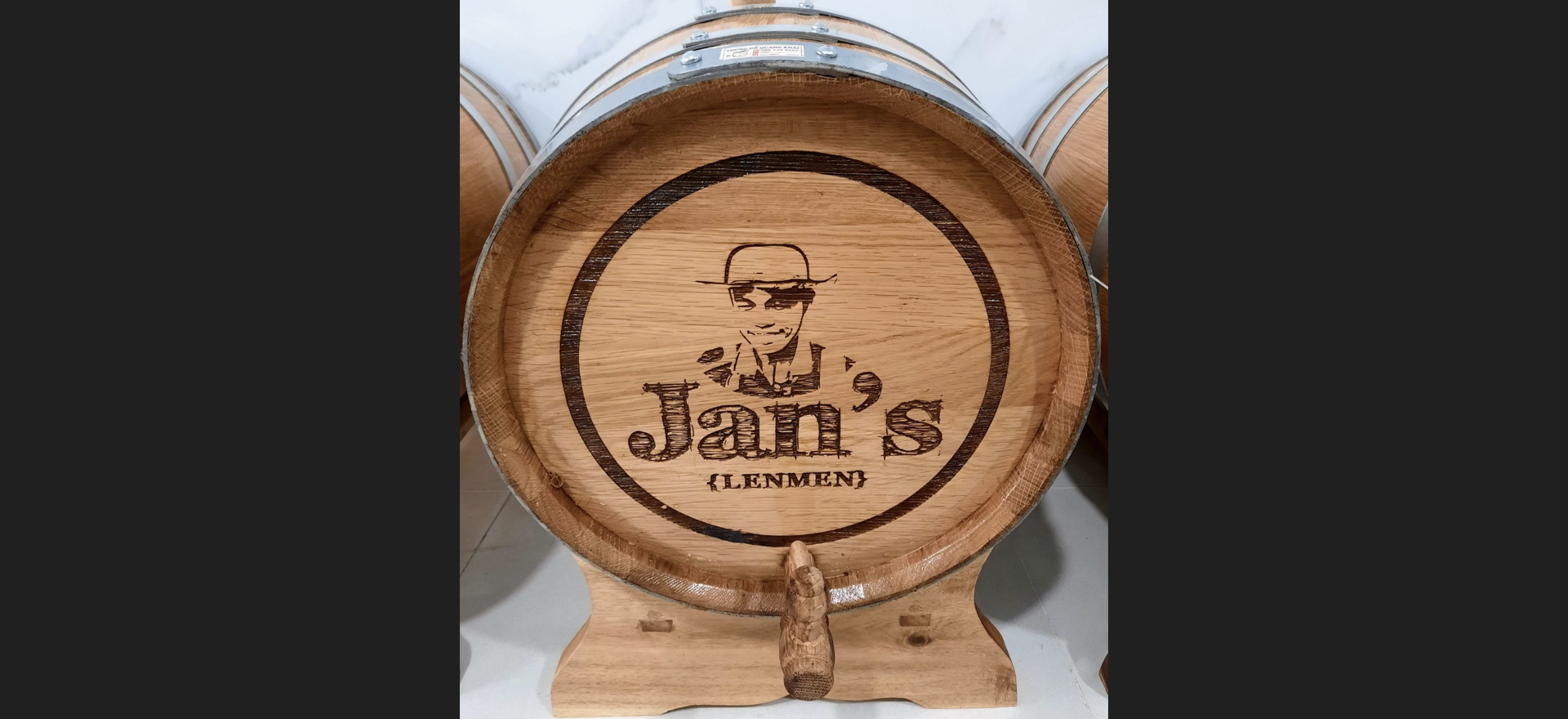
At Jan'slenmen, we call our biological preservation methods fermentation. We cultivate microorganisms to create basic substances that rebalance the environment for products that need more "life time". In this way, we extend the shelf life of products. By creating new substances, we create unique aromas and flavors.
Fermentation has been with humanity since the beginning of time, although its workings have only been understood for a few hundred years. But the deeper we delve into it, the more certain we are: Fermentation and civilization are inseparable.
Jan’s lenmen